Whop Content Rewards and Clipping Explained
Oct 13, 2026 · 8 min read
- Most campaigns pay per 1,000 views on videos you post to your own accounts.
- Clipping cuts existing long videos. UGC campaigns want original videos and usually pay more.
- Expect a 10% fee, plus a 7-day earning window and a 3-day hold on CPM payouts.
- Check the budget, minimum payout and rules before you make anything.
Whop Content Rewards is a campaign marketplace on Whop. Brands, artists and creators put up a budget, and you get paid for views on short videos you post to your own TikTok, Instagram, YouTube or X accounts, usually per 1,000 views. “Whop clipping” means doing clipping campaigns: cutting someone’s long videos into short clips. Content Rewards’ fee is 10% of what you earn.
Below: what Whop is, how campaigns and payouts work, what rates look like right now, and the catches worth knowing before your first clip.
What is Whop?
Whop describes itself as “the first end-to-end API for running a business online.” In plain terms, it’s a platform where people sell courses, coaching, paid groups, software and other products, with a marketplace called Discover that Whop says gives sellers access to “more than 22 million monthly buyers” (Whop, June 2026).
Businesses on Whop add apps to their whop. Content Rewards is one of those apps (Whop Docs).
What is Whop Content Rewards?
When people say Whop clipping, they usually mean Content Rewards. You join it through its page on Whop, where more than 2.5 million people had joined as of October 2026 (Content Rewards on Whop). Its creator terms, updated October 4, 2026, name Content Rewards Inc. as the operator and describe Whop as a separate company that handles payments and withdrawals (Content Rewards creator terms).
Campaigns are funded by brands, agencies, music artists and creators. When we checked in October 2026, the campaigns on the page ranged from song releases and sports commentary to UGC for apps (Content Rewards on Whop).
Whop clips vs Whop clipping. Both terms are used loosely for clips made for Content Rewards campaigns. Whop also ran its own program called Whop Clips, paying creators to clip and promote Whop itself. In April 2025 it paid $1.25 per 1,000 views for YouTube clips (Whop, April 2025). Rates and budgets on programs like that change, so check the current brief.
How Content Rewards works
The flow is the same for every campaign (Content Rewards for creators):
- 1 Join a campaign Browse Discover. Some campaigns take everyone, others ask you to apply first.
- 2 Make the video Follow the brief: platform, length, tags and disclosure.
- 3 Post it, then submit the link Post from your own account and submit the link within 30 minutes.
- 4 The brand reviews it Every submission is reviewed by the brand or its campaign manager.
- 5 Get paid on verified views Earnings land in your wallet. Withdraw whenever you have a balance.
You link your social accounts through each platform’s official login, so Content Rewards can verify the post is yours and read its views. Each submission also gets a “Bot Score,” a 0 to 100 fraud-risk score; a high score flags it for human review, and you can appeal a flag once (creator terms).
Content Rewards says nothing approves automatically. The most common rejection reasons it lists are the wrong platform, missing tags or disclosure, reused content, and editing or deleting the post after you submitted it (Content Rewards for creators).
Clipping vs UGC campaigns
Whop’s docs describe two kinds of campaigns. In clipping, creators “turn your existing long-form content (podcasts, livestreams, webinars) into short clips.” In UGC, creators “produce original content featuring your brand based on guidelines you provide.” The same page notes that “UGC content typically pays higher rates than clipping” (Whop Docs).
Clipping campaigns
cut existing long videos
- Source: podcasts, streams, webinars
- You pick the moment and add captions
- Usually lower rates than UGC
- No filming needed
UGC campaigns
original videos to a brief
- You film and edit your own video
- Testimonials, demos, awareness videos
- Usually higher rates than clipping
- Some ask for a portfolio first
Some UGC campaigns are open to anyone. Others are only for screened creators with a portfolio (example campaign). If you already make UGC for apps, those are the campaigns to look at first.
How Whop Content Rewards pays
Each campaign uses one payout model, shown on the campaign page.
CPM
Per 1,000 views
verified views, up to a cap
You earn on the verified views your post gets.
+ Upside if a clip takes off
− Nothing below the minimum payout
Per post
Flat fee
per approved post
A fixed amount for each approved post.
+ Paid shortly after approval
− No extra pay for a hit
Retainer
Per cycle
weekly to monthly
A fixed sum per cycle for an agreed number of posts.
+ Predictable
− Volume is set in advance
There’s a fourth model, the pool: the budget is split between creators in proportion to their counted views when the pool ends. Per-post payouts settle shortly after approval, and retainer payouts after each cycle ends (creator terms). Retainer cycles are weekly, bi-weekly or monthly (Content Rewards changelog, August 2026).
Minimum and maximum payout
CPM campaigns use two limits. Every campaign sets a maximum payout per clip, shown on the campaign page (Content Rewards for creators), and can also set a minimum. A minimum payout means a video only counts once it earns that much. Whop’s example: at a $3 rate with a $6 minimum, a video needs 2,000 views to count. A maximum payout caps one video: at a $3 rate with a $3,000 maximum, a video stops earning at 1 million views (Whop Docs).
When you get paid
CPM payouts run in rounds: “a 7-day earning period followed by a 3-day hold,” so a round settles about 10 days after it opens. If a clip keeps earning, later rounds open after the previous one settles. Tracking normally runs 30 days from submission unless the campaign sets a different window (creator terms).
Fees and withdrawals
Content Rewards takes a flat 10% of what you earn. Per-post and retainer campaigns with a budget of $5,000 or more are free. You can withdraw any balance, with no minimum and no Content Rewards fee, to a bank account, PayPal, a mobile wallet or crypto, in over 200 countries (Content Rewards for creators). Withdrawals go through Whop, which says standard payouts take up to 5 business days and instant payouts a few minutes (Whop Docs, payout methods). The terms note that instant payouts can cost a fee.
What rates look like right now
When we checked the Content Rewards page on October 13, 2026, the listed campaigns paid $1 to $2 per 1,000 views, with budgets of $1,000 to $1,500 each (Content Rewards on Whop). That’s a snapshot, not a rate card. Rates move with every new campaign.
The budget matters as much as the rate. It’s shared by every creator in the campaign and drawn down as payouts are reserved. If a campaign runs out of money, unpaid earnings are retried when it’s funded again, but Content Rewards doesn’t guarantee the brand will add funds (creator terms).
For comparison, Canvas UGC deals, where you post on a brand’s own account, report CPMs of roughly $1 to $8, and some add a base fee or retainer on top. See Is Canvas UGC legit?
Pros and cons
What works:
- No upfront cost, and no follower minimum listed.
- You post from your own accounts, on several platforms.
- Clear rules: rate, minimum, maximum and platform are on the campaign page.
- Fast, flexible withdrawals once a payout settles.
What to watch:
- Low rates. At $1 per 1,000 views, 100,000 views is $100 before the fee.
- Shared budgets that can run out mid-campaign.
- Every post is reviewed, and posts that miss the brief get rejected.
- Platform risk. TikTok makes “reused or unoriginal content posted without creative edits” ineligible for the For You feed (TikTok Community Guidelines). Lazy clips can sink your own account’s reach. See TikTok shadowban.
Is Whop clipping legit?
Yes, in the sense that the campaigns are funded and approved views get paid. What isn’t guaranteed is that you’ll earn much. Pay depends on views, rates are often low, and your clips compete with everyone else’s for the same budget. Be skeptical of paid courses that sell clipping as easy money. Content Rewards’ own fee is a cut of what you earn, not an upfront payment.
Tips before your first clip
- Read the brief twice. The wrong platform, missing tags and missing disclosure are the usual rejection reasons.
- Check the budget left and the minimum payout. If your clips usually get 2,000 views and the minimum needs 4,000, skip that campaign.
- Submit within 30 minutes, then leave the post alone. Editing or deleting it after you submit can get it rejected.
- Disclose at the start. The terms require “a clear and conspicuous disclosure placed at the beginning of the video” (creator terms), and TikTok requires its content disclosure setting on branded posts.
- Make every clip new. Different moment, different caption, different opening line. Never repost the same file.
- Never buy views. “Buying or generating views, likes, followers or engagement, or coordinating to do so, results in a permanent ban” (creator terms).
- Check the AI rules. Each campaign sets its own guidelines. Whop’s own Whop Clips program said it wasn’t keen on “stuffy, boring, AI-generated content” (Whop, April 2025).
- Track views per campaign. Drop campaigns where your clips rarely clear the minimum.
What you can automate, and what you can’t
Be clear on the format first. Long-form clipping means finding the best moments in someone else’s podcast or stream and cutting them down. That’s its own kind of editing job, with its own tools.
UGC campaigns for apps are different. When a brief asks for the app-promo format, a short reaction, an app demo and a hook on screen the whole time, it’s the same formula as Canvas UGC.
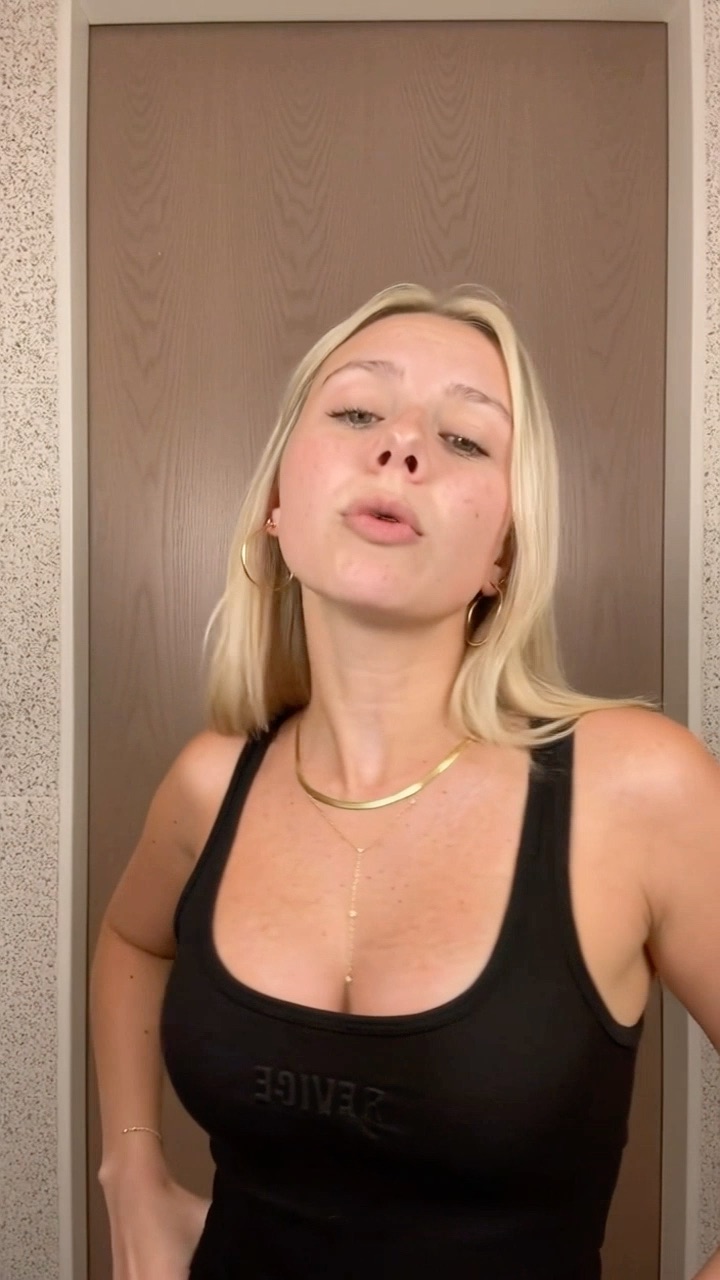
Reaction
App demo
Hook
I didn't want to like this app
@yourbrand
original sound — yourbrand
One video
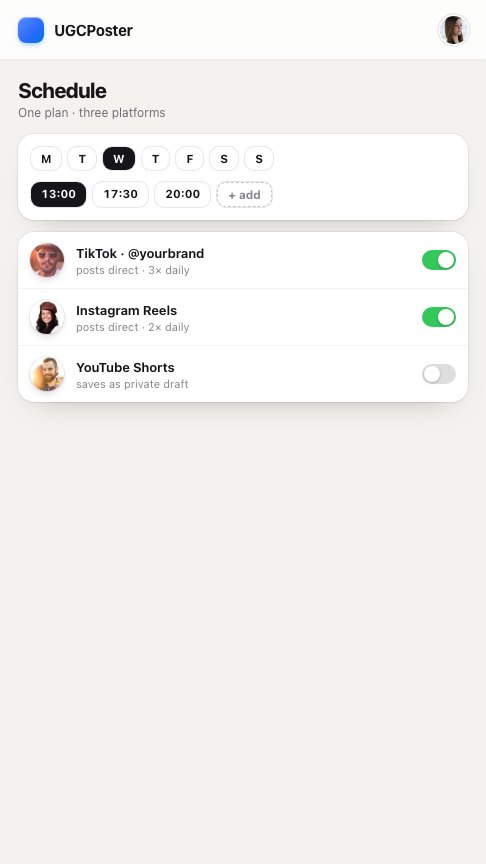
That formula is what UGCPoster is built for. You upload your reaction clips and app demos once. Each run pairs a reaction with a demo, writes a fresh hook from your examples, renders the video and posts it to TikTok, Instagram Reels and YouTube Shorts, as drafts you approve or on a schedule. It doesn’t cut long videos into clips, doesn’t post to X, doesn’t find campaigns and doesn’t submit links for you. Plans are on the pricing page.
Whatever you use, know four numbers before you post: the rate, the minimum payout, the maximum payout and the 10% fee.
FAQ
Is Whop clipping legit? +
Yes. Brands and creators fund real campaigns, and approved views are paid to a wallet you can withdraw from. The catch is the rate: in October 2026 the listed campaigns paid $1 to $2 per 1,000 views, so you need a lot of views to earn much.
Is Whop clipping free? +
The only creator fee Content Rewards lists is 10% of what you earn, waived on per-post and retainer campaigns with a budget of $5,000 or more. There's no upfront payment, and withdrawing from your wallet has no minimum and no Content Rewards fee.
How does Whop clipping pay? +
Mostly per 1,000 verified views (CPM). On CPM campaigns a clip earns for 7 days, then the payout is held 3 days while views are checked. Some campaigns pay a flat amount per approved post, a retainer per cycle, or a share of a pool instead.
Do you need followers for Whop Content Rewards? +
Content Rewards doesn't list a follower minimum, and many campaigns take anyone. Some ask you to apply first, and some UGC campaigns want a portfolio. You post from your own accounts, so your pay depends on the views your clips get.
What's the difference between clipping and UGC campaigns? +
Clipping campaigns pay you to cut existing long videos, like podcasts or streams, into short clips. UGC campaigns pay you to make original videos about a product from a brief. Whop's docs say UGC usually pays higher rates than clipping.